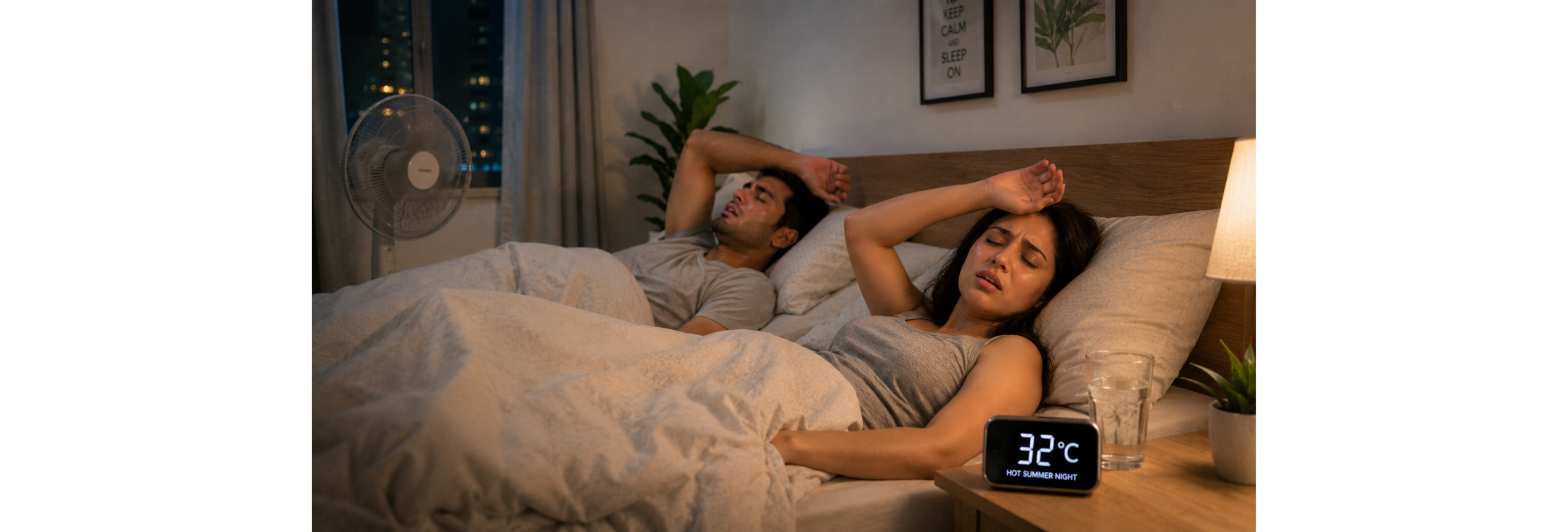

You’ve been there. It’s 2 a.m., the fan is running, and you’re still wide awake staring at the ceiling. How to sleep better in summer heat isn’t just a comfort question. It’s a real sleep quality problem that gets worse the hotter the nights become.
And it’s not just you. Summer nights affect millions of people the same way. The difference between those who sleep well and those who don’t often comes down to a few specific choices, not just the thermostat setting.
Why Summer Heat Disrupts Your Sleep Cycles
Before jumping into fixes, it’s worth knowing what summer heat is actually doing to your body at night. This isn’t just about feeling too warm.
Your body temperature follows a natural downward curve every evening. That drop is what triggers your brain to release melatonin and pull you toward sleep. According to research published in the Journal of Physiological Anthropology, sleep happens most reliably when core body temperature is actively falling. When the air around you stays hot, that cooling process stalls. Falling asleep takes longer, and the early sleep stages get disrupted before deep sleep can begin.
A massive study following 765,000 U.S. survey respondents published in NCBI found that rising nighttime temperatures directly increased nights of insufficient sleep. The summer effect was nearly three times stronger than any other season. That’s not a small finding.
The stage most at risk is deep sleep, or N3, the phase where your body does its real repair work. A study on body cooling and slow-wave sleep in Scientific Reports found that participants who cooled down during sleep gained significantly more N3 sleep time. Lose that stage, and you wake up exhausted no matter how many hours you logged.
How To Sleep Better In Summer Heat: Fix Your Bedroom First
Everything else works better when your bedroom environment is right. Most people underestimate how much the room itself drives the problem.
Get The Temperature Right Before You Even Get In Bed
65-68°F (18-20°C) is the range sleep experts consistently point to for quality sleep. Don’t wait until you’re already hot to adjust the thermostat. Set it an hour before bed so the room is already at the right temperature when you lie down.
No air conditioning? A fan positioned to pull warm air toward a window works better than one just blowing air across the room.
Stop The Room From Heating Up During The Day
By the time evening arrives, your bedroom walls have already absorbed hours of afternoon heat. Closing blinds or blackout curtains before the hottest part of the day keeps that heat from building up in the first place. It can drop your evening room temperature by several degrees without touching the AC.
Get Air Moving, Not Just Circulating
Cross-ventilation beats a single fan every time. Open windows on opposite sides of the room when outdoor temperatures start to fall after sunset. You want fresh air moving through, not warm air spinning in circles.
Simple habits to cool your bedroom tonight:
- Close blinds before midday sun hits your windows
- Set the thermostat to 65-68°F at least an hour before bed
- Position fans to exhaust warm air rather than recirculate it
- Unplug electronics and chargers that generate heat
- Leave the bedroom door open to improve airflow through the home
How To Sleep Better In Summer Heat: Your Bedding Matters More Than You Think
The fabric touching your skin all night either helps your body cool down or works against it. This is one area where the right choice makes a noticeable difference from the first night.
Natural Fabrics Breathe, Synthetics Don’t
Cotton, linen, and bamboo let air move through the weave. They absorb sweat without trapping it against your skin, which is exactly what you need when temperatures climb. Polyester does the opposite. It holds heat close to your body and keeps you damp. Even sheets labeled as “cooling” underperform when the base fiber is synthetic.
Check the fabric composition before buying. Quality bedding made from natural breathable fibers allows your body to shed heat through the night rather than trapping it beneath the covers.
Strip Back The Layers
A single flat sheet or lightweight blanket is enough for most summer nights. That thick duvet feels cozy in winter but acts like a heat trap in summer regardless of room temperature. Going minimal with layers is one of the easiest changes you can make tonight.
Consider What Your Sheets Are Actually Doing With Moisture
Regular cotton absorbs sweat but dries slowly. That means you spend part of the night lying on damp fabric, which is uncomfortable and disrupts sleep. Sheets with moisture-wicking properties move sweat away from your skin and let it evaporate instead of sitting against you.
Miracle sheets use silver-based technology to manage moisture and limit bacterial growth, reducing the warm, damp conditions that interrupt summer sleep cycles.
Pre-Sleep Habits That Help You Sleep Better In Summer Heat
What you do in the two hours before bed shapes how well your body handles the overnight heat. These habits work from the inside out.
Take A Warm Shower Before Bed
Warm water raises your skin temperature temporarily. When you step out into cooler air, your body dumps that heat quickly. That process accelerates the core temperature drop that initiates sleep. It sounds counterintuitive, but bathing in warm water 60-90 minutes before bed consistently shortens how long it takes to fall asleep on hot nights.
Cool Your Pulse Points
Your wrists, neck, and ankles have blood vessels that sit close to the skin. Pressing a cool damp towels against these areas for a few minutes moves cooler blood through your circulation fast. It doesn’t take long and it doesn’t require any special equipment.
Drink Water, But Time It Right
Dehydration makes your body’s natural temperature regulation less effective. One glass of water 30-60 minutes before bed is enough to support overnight thermoregulation without waking you up for bathroom trips.
Don’t Eat Late Or Exercise Too Close To Bedtime
Digestion generates internal heat for hours after eating. A heavy meal at 9 p.m. keeps your core temperature raised well into the night. Intense exercise does the same thing. Finish vigorous workouts at least four hours before bed to give your body temperature time to return to baseline.
Key pre-sleep habits for hot summer nights:
- Shower with warm water 60-90 minutes before bed
- Press a cool damp cloth to your wrists and neck for 5 minutes
- Drink one glass of water 30-60 minutes before sleep
- Avoid heavy meals within two hours of bedtime
- Finish exercise at least four hours before sleep
- Wear loose, lightweight cotton or moisture-wicking sleepwear
When Summer Heat Keeps Being A Problem
Sometimes you do everything right and still wake up sweating. That’s worth paying attention to.
Menopause-related night sweats make summer heat significantly harder to manage. Certain medications, including antidepressants, blood pressure drugs, and diabetes treatments, raise body temperature during sleep as a side effect. Stress and anxiety keep the nervous system activated, which also raises core temperature independent of the room environment.
For these situations, layering in direct cooling at the sleep surface works better than relying on room temperature alone. Gel-infused pillows, cooling mattress toppers, and moisture-wicking sheets address heat right where it matters. Keeping a cool damp cloth on the nightstand means you can reduce your temperature quickly after waking without fully disrupting sleep.
Miracle Made designs bedding to actively manage overnight heat and moisture, working with your body’s natural cooling process rather than leaving it to fight the heat alone.
Written in partnership with Tom White