
The Fragility Inside a Single Rental
A rental house can look stable from the outside. There is a roof, a mortgage, a tenant, and a check that arrives each month. For generations, that image has helped define the appeal of small-scale real estate ownership.
But the inside economics can be less steady. The mortgage is due whether the tenant pays or not. Repairs arrive whether the month was profitable or not. A vacancy does not simply pause income. It shows how much of the model depends on one household, one lease, and one check.
Katrina E. Robinson sees that fragility as the start of a different conversation. Rather than treating growth as something that only happens through the next purchase, Robinson looks at how much potential may already exist inside the property an investor owns.
Robinson, an Air Force veteran and founder of Group Home on Autopilot, helps aspiring owners think differently about shared housing, operations, and the income potential inside ordinary residential properties. Her argument is not that landlords should abandon traditional real estate. It is that many have inherited too narrow a definition of what a rental house can become.
When More Doors Do Not Mean More Properties
In real estate, “doors” have become shorthand for progress. The more doors someone owns, the more serious they appear. But Robinson sees a flaw in that logic. A door does not always have to mean another address, apartment, or acquisition. Sometimes it can mean a rentable room or bed inside a property that already exists.
“I think small landlords misunderstand that they don’t need to add more properties to add more doors,” Robinson says. “I have three properties. But in those three properties, I essentially have 28 doors.”
That reframing changes the math. A single-family rental is often treated as one household and one income source. Robinson’s approach turns the same structure into something closer to a small housing operation, where multiple residents share a home and the owner has several income points rather than one.
Shared housing is not new, but many American investors still treat it as unconventional. Robinson believes landlords are often taught to scale outward before they learn to optimize what they already control.
“Sharing a property is out-of-the-box thinking,” she says. “There are people who have 50 properties, but they never thought to take that one property and break it up into different units within that property.”
How Robinson Reads a House
Robinson’s analysis starts before a property is purchased. She is not only looking at rent estimates or neighborhood appreciation. She is studying how the house itself could function.
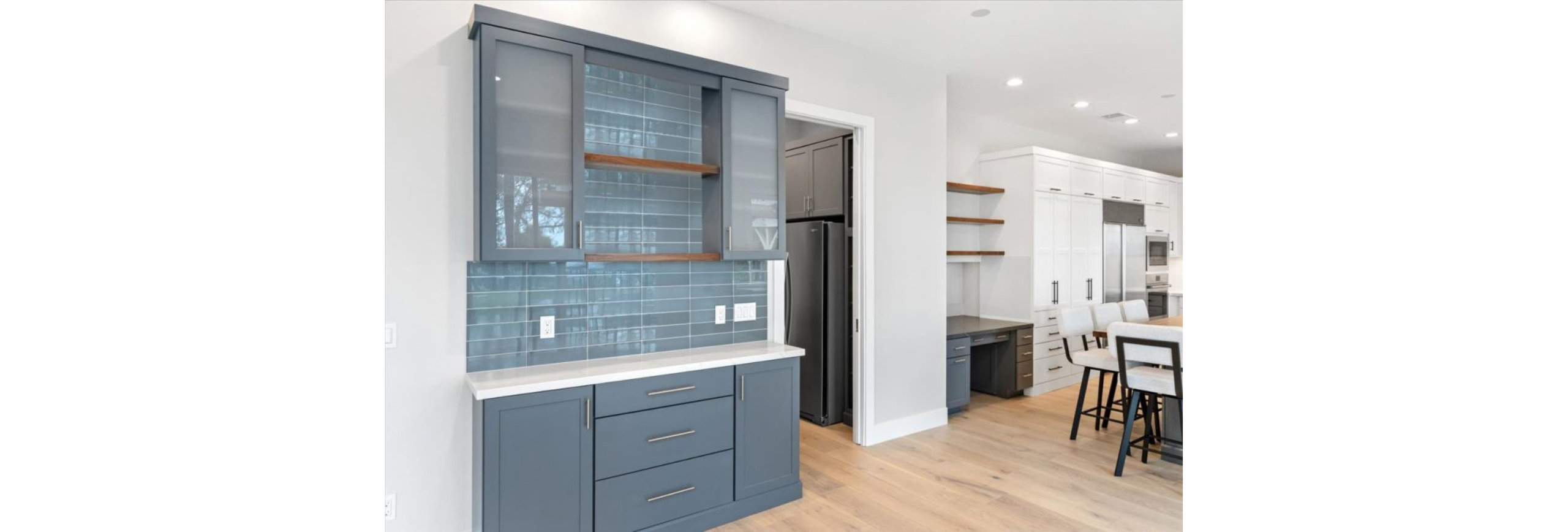
She looks for at least four bedrooms and two bathrooms. She avoids homeowners associations. She pays close attention to public transportation. She often prefers homes that are not too open concept, because defined rooms and extra walls can create more privacy and more usable space.
In a conventional showing, an unusual layout may read as a flaw. To Robinson, it can be useful. A hallway, a closed-off room, or a less fashionable floor plan can support a way of living that a wide-open house cannot. A home near a bus line may matter more than one with better finishes, depending on who the residents are likely to be.
That makes her version of property analysis more human than a simple rent estimate. She is asking who could live there, how they would get to work, how they would move through shared spaces, whether they would need parking, and whether the home can support dignity as well as income.
Income and Housing Needs Can Align
Robinson does not talk about this work only in terms of yield. Many of her residents are people with limited housing options, including individuals who may have recently been sleeping in cars or staying in shelters before gaining access to benefits such as SSI or SSDI. For someone receiving roughly $900 a month, a traditional apartment may still be out of reach. A shared, all-inclusive room or bed can create a more realistic path into stable housing.
“They can afford to live in a beautiful place and not pay that much money,” Robinson says.
This is where her argument moves beyond ordinary real estate arithmetic. The income and the impact are connected by the structure of the arrangement. A landlord may be able to generate stronger revenue from one property while also providing a clean, safe, more affordable place for residents who might otherwise struggle to find one.
But Robinson is careful not to make shared housing sound passive. It depends on systems, judgment, screening, documentation, marketing, and consistent operations. It also depends on understanding the human realities that come with several people sharing one home.
A Less Brittle Model
The practical strength of Robinson’s approach is how it changes the shape of risk. In a traditional single-family rental, a vacancy can mean no rental income until a new tenant moves in. In a shared housing model, one vacancy does not necessarily erase the entire month’s revenue. If one resident leaves, the others are still paying.
The income may dip, but it does not disappear.
For Robinson, the appeal is not only higher cash flow. It is a less brittle structure. Instead of depending entirely on one tenant, a property can be supported by multiple smaller income streams. That does not remove the need for discipline. It increases it. But it also gives the operator more ways to absorb disruption.
That may be where small-scale real estate is quietly moving. Not only toward more acquisition, but toward more operational intelligence. Robinson is not asking investors to give up ambition; she is asking them to update the math. Sometimes the opportunity is not waiting in the next property, it is inside the walls of the one an investor already owns.
Written in partnership with Tom White