
Image credit: Unsplash
Many travelers have been using artificial intelligence (AI) tools such as ChatGPT, Google’s Gemini, and other AI itinerary builders to plan their vacations. Still, there are limitations to what AI can do, and some of its suggestions could be dangerous. Despite the popularity of AI, human insight remains essential to a safe, personalized, and memorable travel itinerary.
The Allure of AI Travel Planning
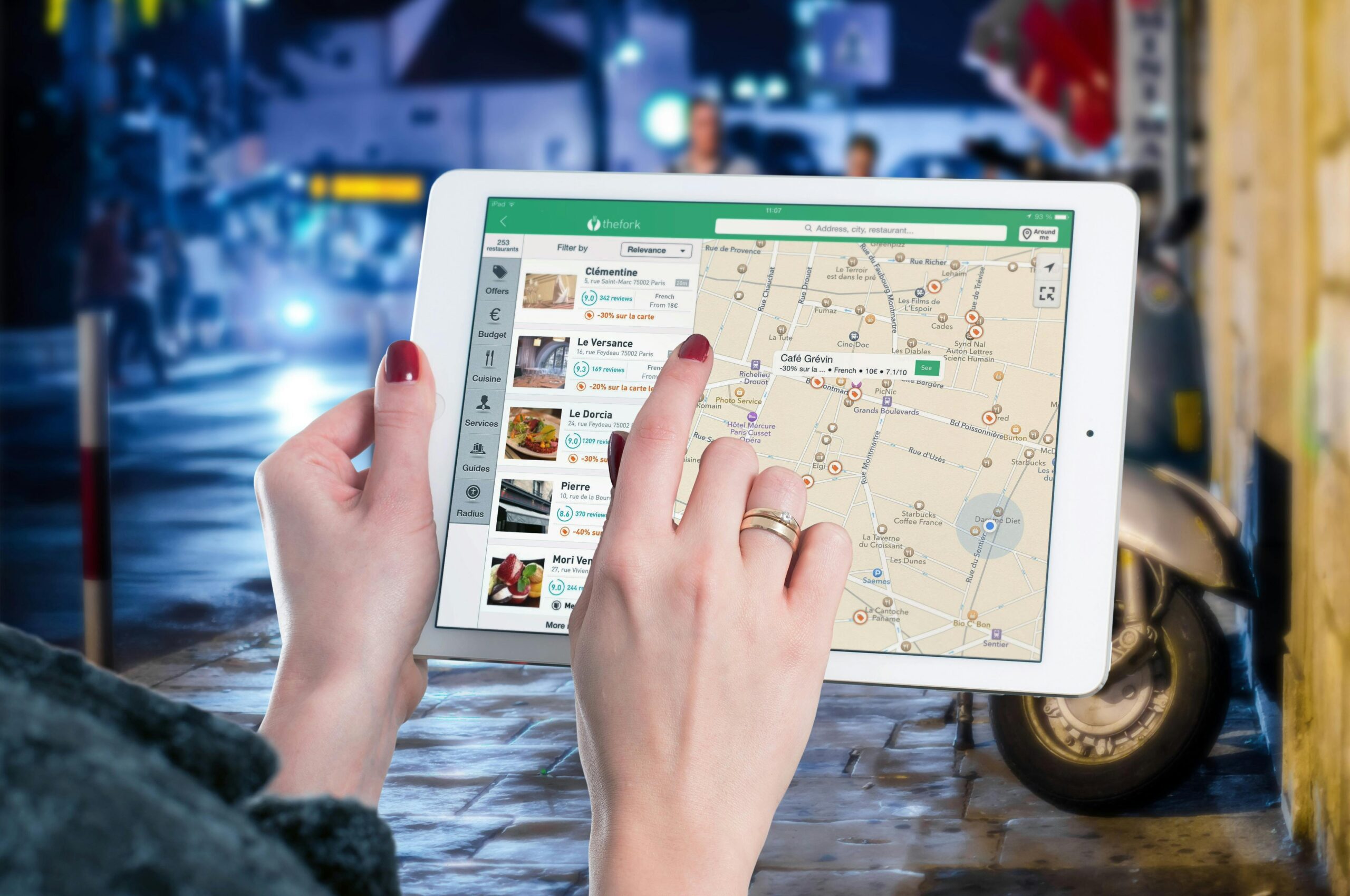
Because AI is fast and helpful, many people turn to it to help them create travel itineraries. AI platforms are even marketed as a tool that can “plan your trip in minutes.” AI can process and analyze vast amounts of data very quickly and make personalized recommendations.
This appeals to people who don’t want to spend much time researching their trips. Users enter their preferences, budgets, and schedules into AI platforms, which then generate itineraries that include flights, hotels, activities, and pricing options.
Additionally, AI platforms are available 24/7.
The problem is that AI can hallucinate and provide inaccurate information, creating unsafe situations for travelers.
When AI Gets It Wrong
AI can recommend places that don’t exist. Because AI can hallucinate, it can suggest hotels, attractions, and destinations that are fictional. Travelers can waste time and money chasing places that don’t exist, or end up in unsafe or remote locations with no available services.
Several examples of this include AI directing travelers visiting Peru to a place it created by combining the names of two unrelated locations. Another AI platform created a video of what it called a “kuak Skyride” cable car, luring a couple on a long trip, only for them to discover it didn’t exist. Another AI suggested that travelers visit the Eiffel Tower in Beijing, China.
In a few cases, the AI sent people to dangerous situations. Travelers were sent to 4,000m-high-altitude areas in Peru without oxygen, with no phone signal, and without an accessible escape route. While visiting Japan, another couple followed an AI schedule that didn’t list the correct time for the last cable car departure. They were stranded on Mount Misen after sunset.
Sometimes the AI doesn’t generate a location, but it also lacks up-to-date information on closed restaurants, venues, museums, observatories, and more.
AI also miscalculates travel logistics. For example, scheduling three attractions in a single day, each 2 hours apart, and open for limited hours.
When Logistics Become Lived Consequences
Shane Mahoney, founder of Lugos Travel, views travel planning as a discipline that operates under real-world volatility rather than ideal conditions. Flights are delayed, trains are canceled, weather shifts, and venues close unexpectedly. What matters most, according to Mahoney, is not whether an itinerary is elegant on paper, but whether it can withstand disruption.
“A client’s train was canceled at 2 am,” Mahoney says. “AI would’ve left them stranded. We already had a private car waiting.”
Years of planning high-end travel experiences have shaped Mahoney’s belief that logistics alone are not enough. Luxury, in his view, is defined by the absence of friction. Travelers should never feel like project managers while on vacation. The moment a guest is forced to problem-solve mid-trip, the experience has already been compromised. “Things happen all the time. The difference is whether the traveler ever has to feel it,” he explains.
Mahoney describes travel planning as an art form built on anticipation rather than reaction. Personalized preferences, from room temperature to favorite flowers, are noted long before arrival. Transportation contingencies are quietly prepared in advance. Local partners are placed on standby. The goal is not perfection, but invisibility. He explains, “When someone shows up and everything just works, that didn’t happen by accident. That happened because someone was thinking three steps ahead.”
AI-generated itineraries, by contrast, remain static. Once delivered, they lack the ability to adapt in real time. Mahoney points out that AI can suggest attractions or routes, but cannot intervene when a strike shuts down a rail system or when a hotel suddenly overbooks.
“Responsiveness is the real luxury,” Mahoney says. “A plan created months ago cannot adjust itself when reality changes.”
Relationships, not databases, often determine the most memorable experiences. Mahoney cites access to moments that simply do not exist online: private after-hours tours, behind-the-scenes visits, or locations closed to the general public. These opportunities are built through long-standing connections with local tourism boards, artisans, and cultural institutions.
Human Travel Planners Fill in Itinerary Gaps
Another area where AI falls short for travelers is in providing the small details that can make a trip stress-free or more enjoyable.
“It’s the little things like knowing which side of the train to sit on for the best view that make a difference. AI said the left side. I knew it was the right,” says Julia Doust, founder of The European Compass.
Years of experience designing multi-country European itineraries have shown Doust how often AI misunderstands the human pace of travel. Digital tools tend to compress days into rigid sequences, treating leisure like a meeting agenda rather than lived time.
“ChatGPT doesn’t understand that you can’t just hop between museums all day without stopping for lunch or a coffee,” Doust explains. “It doesn’t understand that sometimes the best part of Paris is sitting and watching the world go by.”
Safety considerations also reveal a significant gap. AI recommendations may overlook timing, personal vulnerability, or environmental risk, particularly for solo travelers or families unfamiliar with local conditions. “I’ve seen people get stranded because AI didn’t know the cable car stopped running at five o’clock,” Doust says. “Or sent someone to walk to an island without understanding the tide schedule.”
Specialization in complex European travel has positioned The European Compass as a filter rather than a generator of information. Human planners, Doust argues, excel at reassurance, context, and realism.
“People want someone who’s actually been there,” she says. “Someone who knows what’s realistic, not just what’s theoretically possible.”
Travel as Personal Transformation
Travel coaching uses travel for personal transformation. It focuses on a client’s reason for travel rather than their destination. Reasons for travel can include themes like freedom, healing, clarity, or renewal.
Founder and CEO of The Travel Coach Network, Sahara Rose De Vore, emphasizes that AI struggles most when travelers are seeking meaning rather than movement.
“Travel is deeply emotional and personal,” De Vore says. “People want to know how a place made someone feel. What surprised them. What changed them.”
Years spent traveling to more than 80 countries and working with coaches across disciplines have shaped De Vore’s view that most AI systems remain stuck at the surface level of travel planning.
“It’s still the same questions,” she says. “What’s your budget? How long are you going? What’s on your bucket list? That’s not enough for meaningful travel.”
Storytelling, not optimization, often drives real travel decisions. De Vore notes that travelers are influenced by personal narratives, unexpected encounters, and emotional resonance far more than by algorithmic efficiency. “People don’t want to know what you did,” she adds. “They want to know how it felt.”
Work within the Travel Coach Network frequently involves helping clients articulate the life experience they are seeking, not just the trip itself. That kind of introspection, De Vore argues, remains outside the scope of current AI tools. “AI can help with logistics, but transformation still comes from human connection,” she says.
AI Is a Funnel, Not a Final Decision Maker
Clément Bernard, founder of Try Detour, views AI as a narrowing tool rather than a decision engine.
“AI is great at narrowing 1,000 destinations to 10,” Bernard says. “But the final choice must come from emotion and connection.” Product development at Try Detour has been shaped by the belief that travel decisions are fundamentally sensory. Vibe, imagery, safety, and lived experience influence travelers in ways that raw data cannot fully capture.
“Travel isn’t an app. We travel for sensation, for experience, for human connection,” Bernard explains.
The platform’s design reflects the idea that AI should act as a funnel rather than an authority. Destination discovery becomes faster and more efficient, but interpretation remains human. “You still need Reddit. You still need friends. You still need people,” Bernard says. “AI should support the journey, not replace it.”
Future iterations of Try Detour are intended to bridge automation with conversation. Human guides, peer insights, and community discussion remain central to the experience Bernard envisions. “Choice has to feel right,” he says. “That part can’t be automated.”
Traveling Smarter
Travel often sits at the intersection of anticipation and uncertainty. Planning a trip can be energizing, but it can also become overwhelming when information conflicts, schedules tighten, or unexpected changes arise. The way travelers choose to plan increasingly reflects how much structure or flexibility they want before they go.
AI tools continue to improve at organizing options, comparing data, and generating starting points for exploration. For many travelers, these systems function as efficient research companions, offering speed and breadth that would otherwise take hours to replicate manually.
Human planners, advisors, and coaches tend to operate differently. Experience, context, and personal judgment shape how information is filtered, adjusted, or reframed when conditions shift. The value of that role often emerges not during ideal planning scenarios, but when nuance, reassurance, or real-time decisions become part of the journey.
As travel planning evolves, the question may not be whether AI or human expertise is better, but where each fits most naturally. For some trips, automation may be sufficient. For others, interpretation, adaptability, and lived experience remain part of the equation. How those elements are combined is increasingly becoming a personal choice rather than a fixed rule.